Saturday, September 7, 2013

Chapter 3

Chapter 3
Summary, Conclusions and
Recommendations
Summary

This paper focused on answering the question “Are their actual examples of video games containing actual philosophies in them?” Video games don’t just give people shallow concepts but rather provide people with deep philosophies
          The method used in researching was the descriptive method which utilized online articles as sources of information. There were three findings among the three video games discussed:
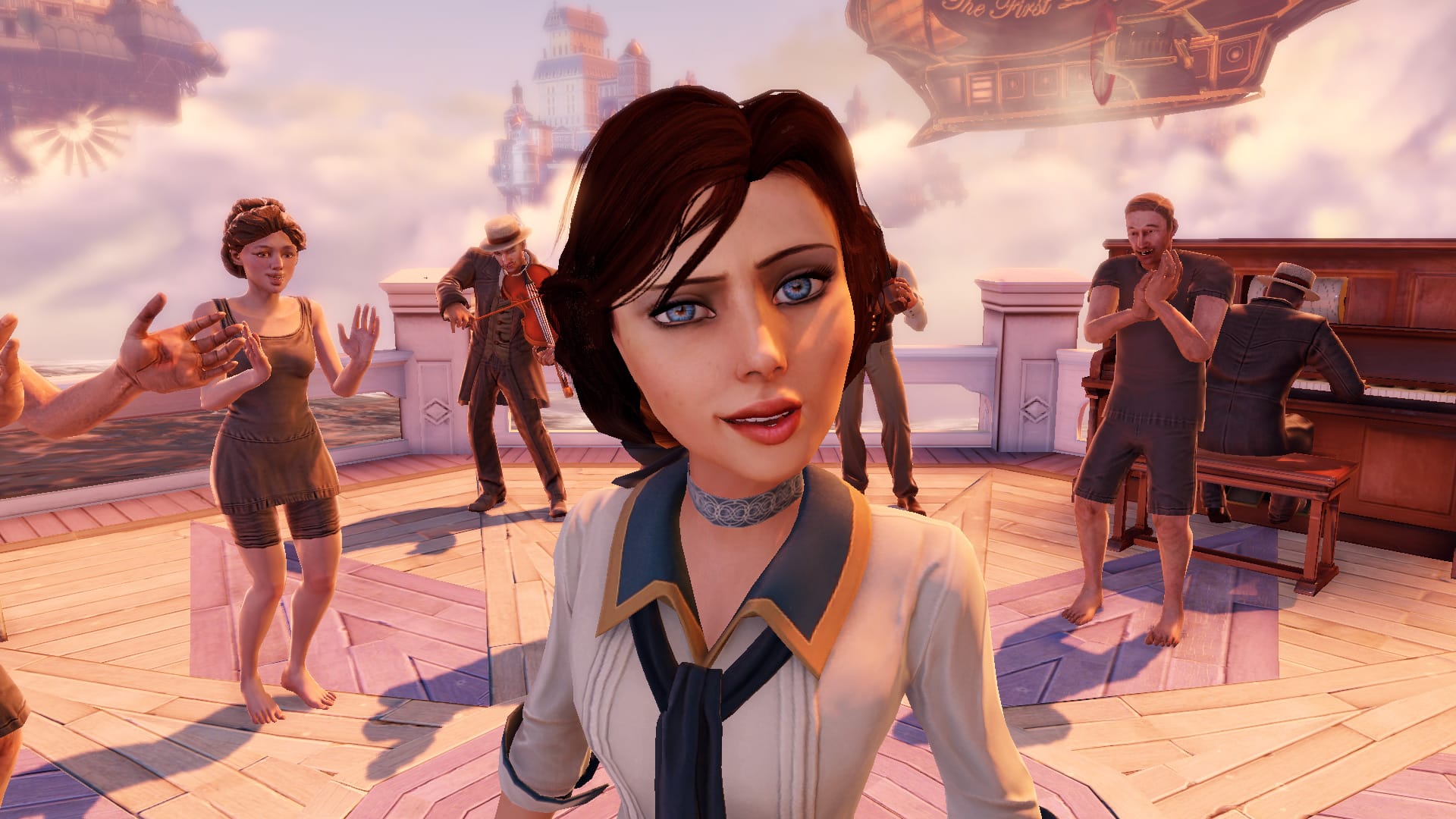
1.     Bioshock Infinite showed players violence in revolutions in order to deliver the context of the anti-revolutionary idea
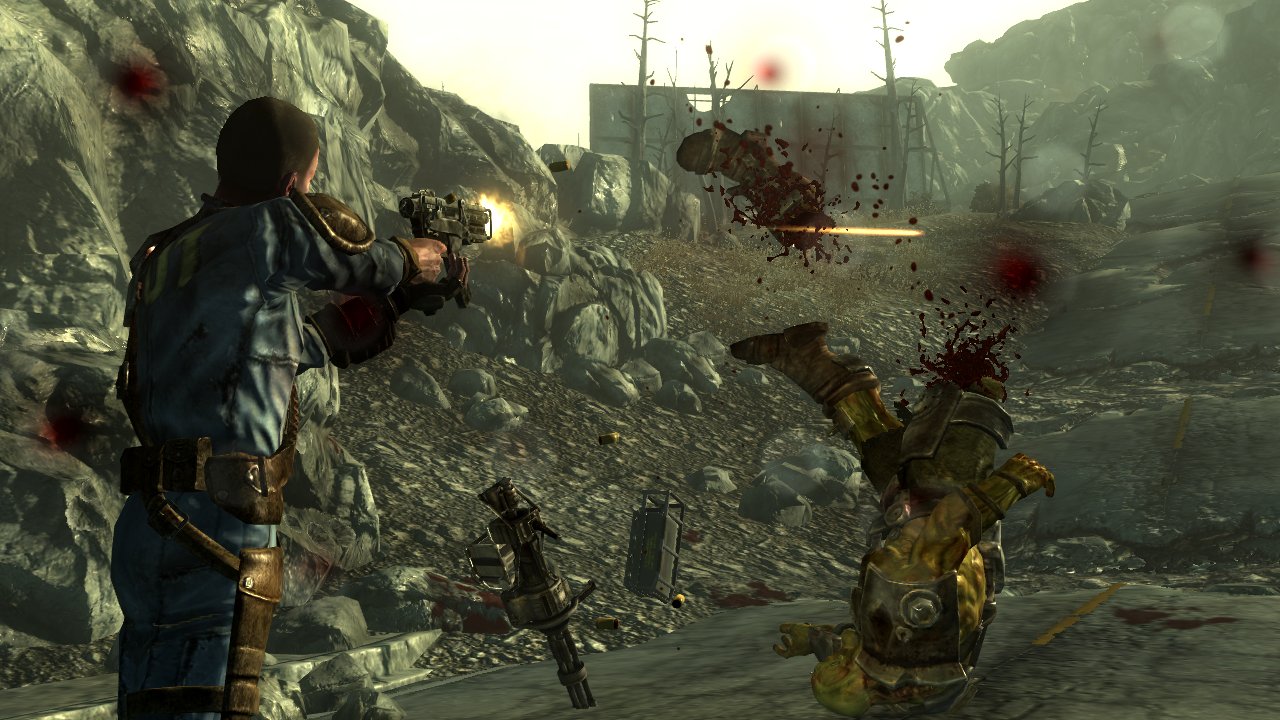
2.     Fallout 3 used a violent environment to portray the philosophy of phronesis which focuses on moral decision making in both reality and video games.
3.     Mass Effect 3 had a galaxy at war consumed with the philosophy of cosmicism that believes that living beings don’t actually have a reason to live.
Conclusion:
          As much as the world sees video games as only violent electronic entertainment, video games proves to have some rightfulness in their content. The philosophies present on the three video games were enough proof that video games are not just shallow but actually really deep. Providing deep philosophies are what most video games do and not just provide very shallow concepts.
Recommendations:
          These recommendations were formulated after creating the conclusion, the researcher would like to recommend that:
1.     In future discussion of the topic, people can tap deeper on to video games to understand why they work that way. Video games aren’t shallow but they are like books with hidden content in them. Those hidden content are deserving of merits buy society
2.     If one is to take on this same topic, the future researcher should add more games in the evidences and try to gather other people’s perception on the video game to create more philosophies that could have been there all along


References:
Electronic Media:
Kerstetter, Jims “Why do we blame games for real-world violence?” Retrieved August 25, 2013 from http://news.cnet.com/8301-10797_3-57571447-235/why-do-we-blame-games-for-real-world-violence/
Sóuter, Ericka “Town Hopes Burning Video Games Will Help End Senseless   Violence” Retrieved August 25, 2013 from http://thestir.cafemom.com/in_the_news/148984/town_hopes_burning_video_games
Ferguson, Christopher “Sandy Hook Shooting: Video Games Blamed, Again”  Retrieved August 25, 2013 from http://ideas.time.com/2012/12/20/sandy-hook-shooting-video-games-blamed-again/
Walker, John “Far Cry 3′s Jeffrey Yohalem On Racism, Torture And Satire” Retrieved August 25, 2013 from http://www.rockpapershotgun.com/2012/12/19/far-cry-3s-jeffrey-yohalem-on-racism-torture-and-satire/
Vitelli, Romeo Ph.D.Can Video Games Cause Violence?” Retrieved August 25, 2013 from http://www.psychologytoday.com/blog/media-spotlight/201304/can-video-games-cause-violence
Munkittrick, Kyle Why Mass Effect is the Most Important Science Fiction Universe of Our Generation” Retrieved July 13, 2013 from http://io9.com/5886178/why-mass-effect-is-the-most-important-science-fiction-universe-of-our-generation 
Erikthereddest “Philosophy and Mass Effect: A Response to Popbioethics”       Retrieved July 14, 2013 from http://lanternhollowpress.com/2012/03/14/philosophy-and-mass-effect-a-response-to-popbioethics/


Chapter 2

Chapter 2
Discussion
Are their actual examples of video games containing actual philosophies in them?
Video Games and Philosphy
          Video games have always been a medium of philosophy ever since. Game developers put their different philosophies in different video games. Philosophers always said that video games are a way to escape reality because like philosophers said, “Life is Crap”. Video games are mediums that people can manipulate. Video games are what people want them to be.

          An article the researcher read entitled “How might video games be good for us?” and was written by a philosopher named Jane McGonigal. The article can be found at www.bigquestiononline.com

          “Life is crap, and it’s full of pain and suffering, and the ONLY thing that makes it worth living the ONLY thing that makes it possible to get up in the morning and go on living is play. Art, and play.”

          The philosopher the writer encountered delivered his message clearly. Video games are mediums to excape reality. Since life is full of pain and suffering, we clearly just want to leave and video games are perfect for that.

          Like what the researcher said, video games are what people want them to be. The pain and suffering experienced everyday are being portrayed in video games so that the players themselves can be the ones who can solve them. That is where philosophy enters video games. Different video games are like different scenarios that have different philosophies. Whether it be political, scientific or others, video games and their gameplay and storylines are now mediums of philosophy.
Bioshock Infinite
          Bioshock Infinite had its philosophy centered only on one thing. The anti-revolutionary idea.
          In Bioshock Infinite and as well as the other Bioshocks in the series, all setting are placed in unbelievably perfect conditions. The first was the “Rapture” which was an underwater utopia where science prospers and the second is “Columbia” which was a floating city for the American Exceptionalism.

          The researcher will only tackle about the floating city in Bioshock Infinite. Now, the floating city was another floating utopia but has one big flaw. The one big flaw is called racism. Racism was rampant across Columbia which caused an uprising lead by the revolutionary Daisy Fitzroy. This is where the anti-revolutionary philosophy of the researcher is gonna be discussed.

          The researcher read an article entitled, “Shoot First, Ask Questions Later” written by Michael Tomsen that can be found in www.slate.com .

" There is an overabundance of revolutions where the struggle produces horrific acts of violence "
          The writer of the article has seen the revoltion of Vox Populi in the game as only an irrational violence. Irrational violence that was highly uncalled for and nothing more. This is one of the philosophies that Bioshock Infinite wants to explore or explain in its own way.
In Bioshock, revolution is portrayed as an irrational violence that is not actually justifiable. People are hurt and killed in the process. No one was given the right to violently protest just because everyone wishes for a revolution. This was a point Bioshock is trying to make.
The Vox Populi was used to portray this anti-revolutionary philosophy. The Vox Populi in the game was the revolutionary group that wishes for salvation. The group had so much belief that they will save the state and cause the revolution to succeed. As time passed, the leader , Daisy Fritzroy , became already power hungry and wanted to do everything just for the revolution. A perfect example was a character in the game who almost died just because of Daisy’s views of revolution. That character was just an innocent boy caught up with problems but as the game wants to portray, revolution did not care. There is already too many revolutions occurring in the world that cause already too much violence.
Bioshock used violence in revolutions so that players receive the message. A message that could not possibly be delivered in no other appropriate way. Violence in the video game was perfect in trying to portray Bioshock’s philosophy about the anti-revolutionary idea.
Fallout 3
          Fallout 3’s philosophy is related on moral decision making. In a more complicated term, this is referred to by Aristotle as phronesis.

          The researcher has a hazy perception towards this philosophy for the researcher himself is not quite adept in the subject of decision making. But the researcher has an assumption that this kind of moral-decisions in video games can be related to real-life encounters. The video game Fallout 3’s setting might not be similar to the worlds current condition but nevertheless, encounters in an post-apocalyptic world can be very similar to encounters in the world’s status quo. The only difference is simple, these encounters are experienced in different leves.
          In order for more enlightenment on the said philosophy in the game, the researcher read the article entitled “Moral Decision Making in Fallout” that was written by Markus Schulzke who posted it in gamestudies.org.
          “Games like Fallout cultivate what Aristotle called "phronesis" - the practical wisdom of knowing how to act morally in particular situations.”
          As simple as that, the writer is saying that the in game decision in Fallout 3 are moral acts in particular scenarios. Fallout 3 feeds on this kind of belief and decided to focus its gameplay on this kind of belief.
          The violent environment provided by Fallout is a perfect way to tackle phronesis. Phronesis is the basically talking about how people act and make moral decisions in different situations.
          Because of Fallout’s violent environment, the game encouraged the players to actually involve their own self-decision making in the game. Not just that, the decisions made were based on the players’ real life personality and moral judgement. There was a low chance of players doing the same decisions since the decisions needed to be made were requiring input from the players’ morals.
          Different decisions made in the game yielded different consequences that can either be negative or positive. This mirrored the players’ action in real life since if the events in the game happened in real life, the decisions made were expected to be made by the players’ who did them in the game. Because of that belief, the game aimed to challenge the players to review their own moral views in real life since the game portrayed to the players the representation of their in game morals.
          Fallout may be violent but it offered a more deeper concept. It offered the idea that the decision in game are very similar to the decisions in real life. The game was not just being violent, the game was really just testing the players’ morals.
Mass Effect 3
          Mass Effect 3’s philosophy is focused on the idea of Cosmicism. Cosmicism was perfectly shown in a galaxy torned by war in Mass Effect.
          Being a small being in a large galaxy poses a large question. “What is my purpose?” That is where the researcher believes where cosmicism enters Mass Effect 3.
          The reason why the researcher only focused on Mass Effect 3 is because of its ending. Each Mass Effect game portrayed different ideas like Mass Effect 3. Mass Effect 3’s ending is in line with cosmicism and not like its predecessors.
          The researcher read two articles about cosmicism and Mass Effect. The first one was, “Why Mass Effect is the Most Important Science Fiction Universe of Our Generation” written by Kyle Munkittrick on www.io9.com. The second one was “Philosophy and Mass Effect: A Response to Popbioethics” written by someone with an online name erikthereddest who posted it on www.lanternhollowpress.com.
           “The flaw is a simple one: the assumption that life has meaning, that intelligent life has a purpose, and that humanity contributes anything to the universe.”
          That statement itself has already described cosmicism in mass effect perfectly. Life has no meaning and we don’t have a purpose. That is what the writers are saying about cosmicism in Mass Effect 3.

          In Mass Effect 3’s ending, Shepard died and caused an uproar upon the fans of Mass Effect 3. The thing is, they failed to see the philosophy of cosmicism in the big picture of the game. Shepard believed that his doing a big sacrifice and the players believed this as well but the thing is, comicism stated that humans are just projecting its beliefs in the universe. Everyone believed that their purpose was to save the galaxy but that is not it. Humans have no actual purpose on this universe because the truth in understanding of the universe is beyond ordinary human comprehension. This is the reason why in Mass Effect 3’s galaxy, people strive to survive against the reapers. People wanted to survive to look for humanity’s purpose. 

Chapter 1

Chapter 1
Introduction
A.  Background of the Study
          Video games have always been under the red light of the world. People seem to always blame video games for the negative outcomes it can cause. This blame is only influenced by media, books or other events that seem to connect real-world violence to playing video games. As much as people want to blame video games, there is still no psychological point that would support this claim. (http://news.cnet.com/8301-10797_3-57571447-235/why-do-we-blame-games-for-real-world-violence/)
          Gameplay is usually looked at a very shallow perspective instead of actually digging to them in a deeper manner. All around the world, different societies have always looked at video games differently. With different perspectives, societies make ways, some acceptable and some, let us just say inadequate. In the year 2012, a town in the U.S.A. called Southington, burned video games with violent gameplay. Not even trying to understand why it presented violent gameplay, they burned every single one of the copies they got. (http://thestir.cafemom.com/in_the_news/148984/town_hopes_burning_video_games#comments)
          Politics always blame video games for causing real world violence. Specifically in the States, tons of shootings have happened and you can easily guess what the politicians blamed, Video Games. They still think that video games affect the young minds of the youth. But there is a problem, there is no such evidence that proves that there is such a connection between video game violence and real world violence. Politics is pointing its fingers in the wrong direction. (http://ideas.time.com/2012/12/20/sandy-hook-shooting-video-games-blamed-again/)
          Similar to gameplay, storylines are often bashed for their so called “offensive” ideas written in them. A lot of critics these days have been bashing video games nonstop for them being offensive. But in truth, they get it all wrong. An example of this is Far Cry 3. Its storyline managed to enrage critics but it was actually trying to say something. It looked offensive but it was actually trying to convey a deep message about racism, torture and satire. This was explained by Jeffrey Yohalem, the game author. (http://www.rockpapershotgun.com/2012/12/19/far-cry-3s-jeffrey-yohalem-on-racism-torture-and-satire/)
          The media as well blames video games for real world violence. It seems that the media can’t just stop themselves from pointing at video games for their psychological effects on people causing real-world violence. A perfect example of this are the media psychologists who seem to blame video games once again. But according to normal psychologists, there is still no psychological evidence whatsoever and what is only present their is the media’s pointed fingers on video games. (http://www.psychologytoday.com/blog/media-spotlight/201304/can-video-games-cause-violence)
Contrary to popular belief, video games don’t just give people shallow concepts but rather provide people with deep philosophies. This study aims to focus on providing examples of video games with philosophies.


B. Statement of the Problem
          This study aims to answer this question:
1.     Are their actual examples of video games containing actual philosophies in them?


C. Significance of the Study
Gamers. This research paper would be able to help gamers in their daily struggle in defending the video game name. They can use this paper as a reliable source when it comes to their defence. This will also help them understand better the deeper content of video games that are not usually taken into consideration by most gamers. This can cause them to fully understand video games deeply and more detailed unlike their former beliefs. This can also help them in understanding video game philosophy since this study is set to philosophy.
Game Developers.  This research paper would prove essential to game developers since they make video games. This can be a good source for reference when they are trying to explain why their video game storyline and gameplay work the way they wanted and designed it to. This can also help them to understand the deep complex of video game philosophy since this paper focuses on providing and explaining philosophies in video games.
Future Researchers. This research paper will  become a reliable basis on making research papers related to video game philosophies. They could use this as a source of reference in conducting their research. This paper would really help them when it comes to improving or going into video game philosophy in a deeper manner. This would be their starting point in researching more about the topic and help them manoeuvre their study into the correct path.

D. Scope and Delimination
          This study focuses on proving that video games don’t just provide shallow concepts but rather provide deep philosophies. This study will just provide different video games with different philosophies and further explain them.
          This study will only discuss three video games: Bioshock Infinite, Fallout 3 and Mass Effect 3. This study will focus only on their philosophical content and nothing more. These video games that were selected are believed by the researcher to be violent when it comes to their play style. Due to its violent gameplay, it would be perfect examples in answering presented by the research paper.
E. Materials and Methods
          This research study is going to utilize the descriptive method. The researcher will focus on describing the philosophies of the given video games. The researcher will gather data and analyze them thoroughly. This will lead the researcher to derive an answer that the paper needs. With these at hand, it can easily be said that descriptive method is the most appropriate method to be conducted.
          Information will be gathered from different articles from the internet. These articles are mostly made by different people who are related in a way with video games.

F. Defintion of Terms
Video Games. An electronic game played via certain medium such as consoles.
Media. A collective term used to describe such massive communication.
Violence. Anything that involves harmful things that can be physical or emotional.

Philosophy. A strong belief in concerned with life.

Sunday, July 14, 2013

Blogpost #6: Mass Effect Part 2

          Cosmicism has become an idea that is revolving my mind and I am still wishing to seek other people's view on this. Why do I get the idea that comicism is what is happening to our lives right now. With this amazing thought as well, I have also decided to buy a copy of Mass Effect 3 for my Xbox 360. I think I will enjoy playing Mass Effect because like I said, Cosmicism! This will be the second part of my Mass Effect blogposts that discusses Cosmicism.


          This second article is entitled " Philosophy and Mass Effect: A Response to Popbioethics" written by erikthereddest. The article was posted on lanternhollowpress.com .


" One must accept the premise that the technology to explore the universe is a trap, and a structure that forces galactic civilization to follow an invariable path. "


          Technology is a trap ! Woah. Now that is something that surprise me. Suddenly after reading that part I got a self-realization of what technology is. I know that improving technology might be bad but can be reverted if we control it's growth. Another but ! Yes ! It is just a trap. A trap that might cause us to steer towards an undesirable path. Why did I say undesirable ? Because when we reach this certain path, we will realize it was something painful. What we did has no turning point. We can't change. We can't do anything. We now just clinging to a small spec of hope and wishing for survival. Salvation will become impossible for we are on our own.

          This is one of the fun thoughts that invade my brain everytime I think of what I said "Salvation will become impossible for we are on our own " . I usually think that there might be false prophets during this time. Why would there be false prophets ? Obviously because they want to feed off of people's misery. Misery from the realization that there is no absolute or superior divine watching over them. Likewise, this is the perfect time for the arrival of false prophets. But like I said, this is one of the fun thoughts I have so I also imagine in the reality where cosmicism is present, heroes will arise. Heroes that will stand even though salvation is out of our reach. Heroes that will fight for survival not actual salvation. And finally we might realize something, faith is given to ourselves and to ourselves only.

          Now I want to go back to the invariable path. What kind of compelling forces of evil might awaits us there ? I have a fun prediction. It can either be technology itself or maybe even worse. Ourselves. We might reach the point where this path might be the place where we no longer hold our old moral values because of technology. We might become cold and heartless machines that is very similar to how technology has changed everything. Now that is really horrible. With that kind of event occurring, we might even drive our race to extinction.


Mass Effect is the first blockbuster franchise in the postmodern era to directly confront a godless, meaningless universe indifferent to humanity. "

         There you go. This is another reason why I now want to play Mass Effect 3. It became famous without the masses going against it's framework. A godless universe does not have problems with my own belief because if you're an open-minded person, everything is possible. But anyway like the quote wants us to know, our existence means nothing. We have no meaning. Don't take it in the wrong way. It is just a certain type of belief. No one is forcing you to believe it. Now for my reccomendation, for those who haven't played Mass Effect just like me, We should give it a shot. Let us allow our selves to dwell in its structure that was built on cosmicism. That would really give us a greater feel on how cosmicism is portrayed. 

Saturday, July 13, 2013

Blogpost #5: Mass Effect Part 1

          The only thing I remember from Mass Effect is that people were really angry on the way it ended. My friends were really frustrated because of how it ended. That is the only thing I remember because I didn't really want to play Mass Effect. I don't hate it but I really don't feel like playing it. Maybe it is because I was not able to start it from the first game that's why I lost the motivation to play it. But anyway, I am gonna discuss once again the video game's philosophy. I actually found two articles regarding this to help me discuss it further. So what I am gonna do is that I will actually do them in separate blogposts to be able to focus on only one.

          The first article I read is entitled " Why Mass Effect is the Most Important Science Fiction Universe of Our Generation " and it was written by Kyle Munkittrick who posted it on io9.com.


          " The flaw is a simple one: the assumption that life has meaning, that intelligent life has a purpose, and that humanity contributes anything to the universe. H.P. Lovecraft, a man "against the world, against life," refused to assume the universe was good. Out of that refusal crawled the sublime philosophy of Cosmicism. "

          Cosmicism is really an interesting concept. Interesting enough for me to get really satisfied. What I mean about being satisfied is for the question " Why do we exist? ". The way it tells us that our true purpose is above and beyond our own understanding and perception is a good enough answer for me. The way we project our beliefs into the fabric of universe itself might probably not be worth anything. Everything we have done can be erased in an instant for the things we have been doing was never and will never be in line with the meaning of our existence. The only reason I think we're doing this is because we are struggling an answer. All our efforts and attempts are just a way to search for the right answer. But like the concept of Cosmicism, our struggles will be for nothing because our meaning in existing is beyond our own hands. There probably is a higher form of meaning in the fabric of the universe but maybe this was not meant for us to discover for we are just small part of the grand architecture of existence and how things work.

          With these ideas, we can't really deny the fact that well, the universe is a bad place. So in the midst of evil vibes within the cycle, is being evil still right ? No, it is still not right even though we might not realize the things we do and why we do them, that is not a good excuse to be evil. Since we are in the blind when it comes to the meaning of existence, we should cling to our morals. While we hang on to our morals, we never let go of ourselves. Well isn't that a a good thing ? Standing against the evil tide of the galaxy ? Evil will never prevail if good makes a move against it. Since the galaxy has become a place similar to the void or oblivion, the only thing we can really do is to do good and survive. Stay true to our own moral beliefs and let these beliefs be our guide through our efforts for survival. We might not know our meaning of being here, but we know that what makes us " us " is our moral understanding that we must survive but not in a dark way but as much as possible in a good or best of ways.


" Why fight for survival in a meaningless universe? "

          This is the best quote and question for me. This is another form of portrayal of our everyday lives. Why do we struggle everyday ? Why do we need to survive ? I am not gonna answer this question because I recommend the readers to just think deeply about this question. Everyone has their own answer to this. Everyone has there own purpose. But don't deny the fact that it can be meaningless. Again readers, think deeply about it and answer the question. After you have answered, ask yourself this, " Will it be worth it in the end ? "

Thursday, July 11, 2013

Blogpost #4: Fallout

          Oh yeah ! Another great piece of work from Bethesda ! Fallout ! Now before anything else, I just want to say that I regret not playing this game. I always said to myself that open-world games were my favorite types and I never even played Fallout which makes me really sad. Anyway, Fallout is a game that surrounds on the idea of moral decision. A game of moral decision, now that is one of the greatest perks a video game can ever have. Okay now let us put those aside for a while and let us begin tackling the philosophy inside these decisions.


          So like always, I read an article with same topic like the one I am currently studying right now and then try to relate and explain my side. So the article I read was entitled " Moral Decision Making in Fallout " which was written by Marcus Schulzke who posted it on gamerstudies.org


          " Games like Fallout cultivate what Aristotle called "phronesis" - the practical wisdom of knowing how to act morally in particular situations. "

          Phronesis ! Now that is one of my new favorite words with deep meanings. Now phronesis is a really good way to describe different values of different players of the game. There is a very high chance that the decisions we make in Fallout are different with another player. Because of this, we are often given actual consequences in our in game decision. For me, this are the virtual counterpart of actual real life consequences. Since we carry out our own perspective in morality inside the game, our personalities are the ones present in our character. Since they are ours, it just goes to show that whatever consequence we got from this video games is probably gonna be the same in real life. Now this is actually a good thing because if we encounter really bad consequences in the game, this could really change our moral view. Like I said, our own perspective in morality is present inside the game which means it is our fault that we received this consequence. There is something wrong with our own perspective causing us somehow to force ourselves to change it. Maybe this is what was meant when the writer said that this can make players more wiser and more sensitive. We change because of these kind of faults causing us to become wiser and more sensitive because we never really want to encounter really bad consequences especially in real life.


          " our actions in the game determine what our relation is to the game in reality "

          That is very deep quote and I think we can all agree. The way we do things in video games is just a virtual representation of our actions in reality. I know we sometimes realize this not only in playing fallout but in may other games. I could think of one. The Walking Dead. Man that game would really push you in making moral decisions in dire situations. But anyway, we learn from these actions and usually become affected of the results. What if this could happen in real life ? Yeah. That is my question to myself when I am really into decision making in games. I will say it again readers. These are just virtual counterparts of what we do in real life. Now here is my suggestion to all of you. Please reflect on your actions in video games and then ask yourself the same question I ask myself " What if this could happen in real life ? ". You might learn something about yourself and you might even change for the better.  

Wednesday, July 10, 2013

Blogpost #3: Bioshock Infinite

          Oh yeah! Bioshock Infinite! One of the few games I really wanted to finish but I really could not because of some odd reason. I always liked Elizabeth and those motorized patriots. Recently I realized something in Bioshock. There is actually a philosophy presented in the plot which blew my mind. Now before I start talking about it, I just want to make something clear. I might have a different understanding in the philosophy than other people. My understanding might be different but please bear with me. Now let us begin!

          In order to understand Bioshock Infinite deeper, I read this article entitled " Shoot First, Ask Questions Later " written by Michael Thomsen. The website where I found the article is www.slate.com.


         " The heart of all revolutionary causes is a belief that people deserve salvation from their present conditions. The anti-revolutionary mind is not opposed to salvation but simply believes it is impossible. (Think about this in context of the game’s ending revelations, when you get there.) "Some men crave money, some men crave love. My father craves a flood of fire," Elizabeth says to DeWitt on the road to the climax, something it seems everyone in Columbia craves. "Why do we deserve salvation?" By Infinite's end, Levine's answer seems clear: We don't. "


          Well isn't this something ? Being an anti-revolutionary or just the idea of it has not yet actually crossed my mind till now. If you read the whole article you'll see how this idea was portrayed through the characters especially to the Vox Populi, the revolutionary group in the game. Salvation is the prize of revolution and freedom always come with salvation. But something makes you think, the irrational violence caused by " revolution " . We destroy and kill in the process. It is for our salvation, yes that is true but is it justifiably good ? Are we given the right to violently protest because we want revolution. Now that is definitely something to think about.


          As much as my heart wishes to go against this idea, my mind seems to go with this kind of idea. Yes I know we all deserve freedom and has the right to fight for it but there is still something about the game's philosophy that makes me have a cold feeling about the idea of revolution. Bioshock Infinite did a good job if they were able to implant this idea to my mind and other gamers.


" There is an overabundance of revolutions where the struggle produces horrific acts of violence "

          Woah. That makes a strong expression doesn't it. With a little more adjustment, people might understand what it means. I am not saying that revolutions were bad. I am simply saying that people should understand even just tidbit of what the anti-revolutionary idea is. By the way don't worry guys, I am not an anti-revolutionary guy. I wish for freedom and salvation as much as the same person if the situation in the political state gets dire. For those who read this blogpost, I really wish that you could let even just a small part of the game's philosophy sip into your mind. I enjoyed the way it challenged my own philosophy on revolution. Try to let the philosophy sink into you and assure you your time will not be wasted.


Tuesday, July 9, 2013

Blogpost #2: Video Games: Philosophy Within

          Due to long hours of thinking and arguing with my self, I have finally chosen a path on how to tackle my topic. I chose philosophy. In the eyes of my close ones, it is very unusual for me to choose something with a deeper meaning. That's the thing, I chose philosophy because it is unusual but little did people know, I enjoy talking about philosophy because sometimes I like to relate it to how society works. But you know what's the best thing about this ? It is philosophy in video games which makes it ten times better. Now that I said the things I wanted, let us begin to study about the philosophy in video games.


          Before I go jump directly into discussing more on the specific points, I decided to be introduced into my chosen path. I read this article called which is a review about the "Philosophy Through Video Games" which was a study done by Jon Cogburn and Mark Silcox. The review was written by Mr. J. Ryan Parker and I found it on www.patheos.com.

         "They argue, “The fantasies that we indulge in about ourselves when we pretend to be characters in a fictional world teach us about our place within the ‘real’ world, and this is precisely the sort of self-knowledge (one must surely assume) that will aid in the pursuit of true autonomy within our lives” (143). "


          I really want to talk about this part because it touched me in a very weird way. The way that it said that they argued that our "pretend" roles in video games actually teach us in our real roles in life, that phrase really got me. Why ? Because I feel like this is actually true. Take me as an example, I learned how to blend and act out my role smoothly because of the different video games I played.  How ? You tend to adapt to your role in a deeper way whenever your playing. I can't really explain how it works but that is just the way it is. Gamers suddenly fall into a weird spell or illusion that we feel that we ourselves are inside the video game. Our own self and personality get directly involved in our role causing some small or minor changes in the way we act as ourselves both in video games and reality.


          " While video game criticism has yet to reach the cultural status of its film counterparts, academic writing about and research into video games, their popularity, and cultural influence is certainly getting closer

          That quote presented above, that is one of the things that really inspired me in taking the path of philosophy in video games. I wanted to contribute more while we are getting closer to popularity. I also felt happy since I found out that there are people out there who actually wants to dig dipper in the philosophy hidden within video games. It is true that the usual people who actually know these things are what we call the more " hardcore " gamers. But still, even a normal gamer can know these and understand them. I mean hardcore or not we are still all gamers and we can all understand video games. But then again, it is still a matter of choice if we want to learn about stuff. I am gonna end this blog with a simple suggestion, try to be more attached to your role in a video game you are currently playing. Try to relate it to your role in reality and you might realize a connection between your two roles.

Saturday, June 29, 2013

Blogpost #1 Video Games: The Beginning and The Growth

                 Here is the deal, I have been a gamer and also huge nerd when it comes to video games. I usually play FPS games on either my gaming pc, xbox 360 or ps3. I am also a huge fan of the Elder Scroll Series. Just recently, new consoles are set to arrive the gaming world and a new gaming era or generation is coming once again. With all this new innovations to the world of gaming, sometimes I wonder when or how it all began. I want to know how gaming was before all this awesome new changes in the gaming world. With all my curiosity building up, I decided to research the beginning of video games and how it rolled over into modern time.


                I read an article or a timeline written by Ms. Amanda Kudler entitled: Timeline: Video Games. I found it on Infoplease.com.

                So I read the timeline and I am only gonna put up the most iconic events in video game history according to my own judgement because I don't want to put up everything in this blog post.


                So lets begin, the first video game was a tennis-like game and was played on an oscilloscope in  1958. After that, things just rolled and rolled to innovation. The first home video game system was then created by Atari in 1972 and then released it to the public later that year. The first game they made was Pong. In the year 1981, Arnie Katz and Bill Kunkel created " Electronic Games ", the first video game magazine. After four years, one of the most iconic games was created by a Russian programmer named Alex Pajitnov. The name of the game was Tetris. Years following that, some new consoles were introduced in the US market like the Nintendo NES, the Sega Master System and the Atari 7800. And then we get to the point where a person actually reacted to the violence in video games. In 1993, Senator Lieberman and Kohl launched a senate investigation on video game violence hoping to ban violent games.


The results of the investigations were released in 1994 and thus the Entertainment Software Rating Board was created. On the same year, the Sony PlayStation made their debut. After a year, Nintendo 64 was released. In the year of 1996, another iconic game was released in japan. The game was ''tamagotchi''. The year 2000, the PlayStation 2 was released and one of the most famous games was also released. The game was ''The Sims''. In 2001, Xbox was released and the GameBoy Advance was released by Nintendo. In 2004, the Nintendo DS was released which was a portable and touch screen console. In 2005, The PSP was released and the Xbox 360 was finally unveiled to the public. In 2006, The Wii And PlayStation 3 arrived to the market. And in 2008, GTA IV breaks sales records after selling 6 million copies for its first week.

I will not include here the events after the last date I included because our current video game generation is moving on to a new one but it is not actually over so let us put the present and the future in a corner for a while.

     With all the events I have read and included in this blog post, I felt very happy because I was able to know how it was before. It was exciting to know that even if technology was not that advanced in the past, video games still found a way to be a source of electronic entertainment. Video games did evolve with technology and that is what I observed on what I read.


       In the timeline, there were many things I read that I really want to talk about. The first one was about the tetris game which I was really surprised it was a Russian who made the game. Then again, Russians are awesome based on my perspective and I can really see how the game tetris lasted for so many generations up to now. The next one was the investigations of 1994. So about the investigation, based on my stock knowledge I think that a few examples of the games were Mortal Kombat and Doom. Even though I liked those games when I tried it out, you got to admit that those games were actually violent. I could relate why ESRB was formed because we really needed it in the gaming world. The next one is the invasion of the new consoles. When Xbox 360, PS3 and Wii arrived, I became really happy because for me, they were marks of a new gaming generation. The reason why I think they were marks because there successors like the upcoming Xbox One and PS4 are also marks for the new gaming generation. Last one is the GTA IV topic. I really can't blame people why they really enjoyed GTA IV because even I got addicted playing that game. GTA IV deserved its achievement and I am happy to have bought that game.


       I wish I could have found an actual article on the history of video games but I couldn't so I can't actually post a quote that I might deeply explain and relate to. Instead, Im gonna post a quote that I will explain and the quotes is also about video games.


 What are Video Games?
 What are video games?  Well, video games are what you want them to be.  What other medium allows you to escape into your own reality by playing an immersive game as a single player, or promote teamwork in cooperative play, and yet allow for the merciless pounding of someone into submission in competitive play?
            So the quote I showed above is from "School Newspaper Article#2; What are Video Games ?". It was written by Michael Nunez and it is form IGN.com
               As a gamer, we all know that whether we are from the past generation or present, video games will always have that meaning presented in the quote. We have been introduced in to so many perspectives in video games that we did not actually expect. We entered the life of a soldier, a knight , as the Dragonborn , as an assassin and many more. We found friends through multiplayer and learned to build our abilities as a team. Most importantly, the sense of achievement we get when we dominate our enemies in PVP matches. Video games will always be like that to us and it will stay like that as long as we, gamers, choose it to be like that. If you're curious of my other definition of gaming, here it is. "Video Games are a safe haven where Matzki100 , my usual username in almost all of my games, can live a life however he wants it to be and be free of realities problems".
             Now that I shared a quote and my reaction to it, Lets get back to the final part of this blog which is about the timeline or history of video games I presented. I sure do feel nostalgia when I was reading the timelines because I was able to play some of the old video game consoles in the past. Gamers should actually read more about history of video games because you can appreciate the gaming world more. You will realize that video games try its best in order for us to enjoy them more. Who knows? Maybe when you read it just like me, you'll feel a little bit of nostalgia and a tickle in your gamer spirit. With that in mind, I would also like people to remember what the quote stated, Video games are what you want them to be. The past, present and future video games will always be the same for every gamer.